AI Camera Angle Prompts for Better Composition
A camera angle determines how the viewer understands a character. Eye-level framing feels conversational, a low angle can feel dramatic, and a wider shot leaves room for an environment to become part of the story. The AI camera angle prompts below give you specific instructions you can copy into an image-generation brief instead of relying on vague terms like "cinematic shot."
Each example uses an original fictional adult subject. The focus is composition: how much of the character is visible, where the horizon sits and what background space remains available.
Browse the AI prompt library for more ready-to-copy ideas.
Start creating: To try a copy-ready still-image prompt, open the PornX AI image generator.
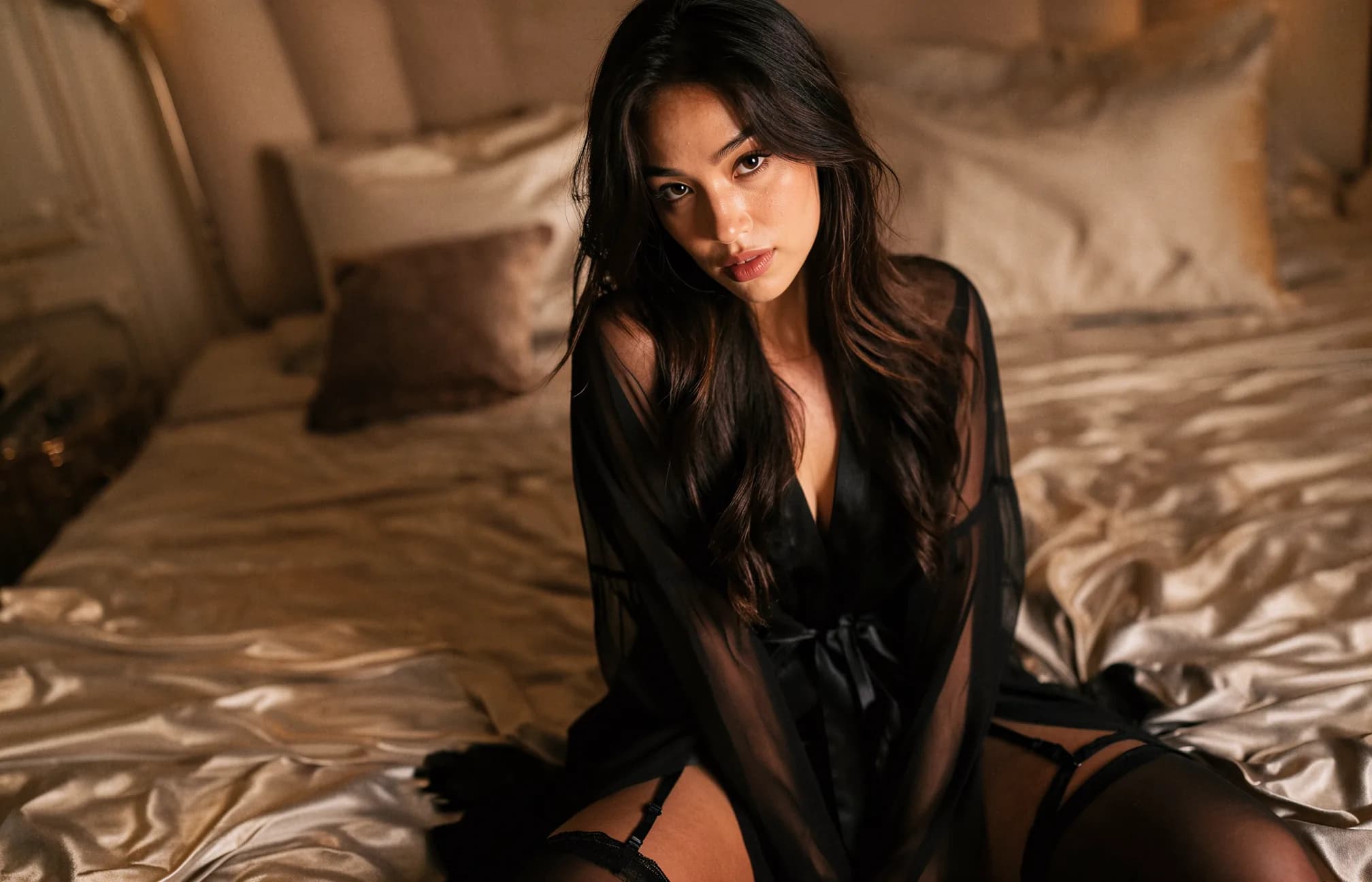
Choose Distance Before Drama
First decide whether the viewer should study an expression or see the entire scene. Close-ups emphasize the face but cut away context; medium shots show body language and clothing; wide shots give the setting more weight. Only then choose eye level, high angle or low angle. A dramatic low angle with an extremely close lens can exaggerate proportions, so use it deliberately.
The frame also affects future animation. A medium or full-body source image gives an Image-to-Video model more space for gestures and movement than a cropped extreme close-up. Use a supported aspect ratio that matches your intention, not just the largest available canvas.
To choose a frame that suits the subject, read about AI image aspect ratios.
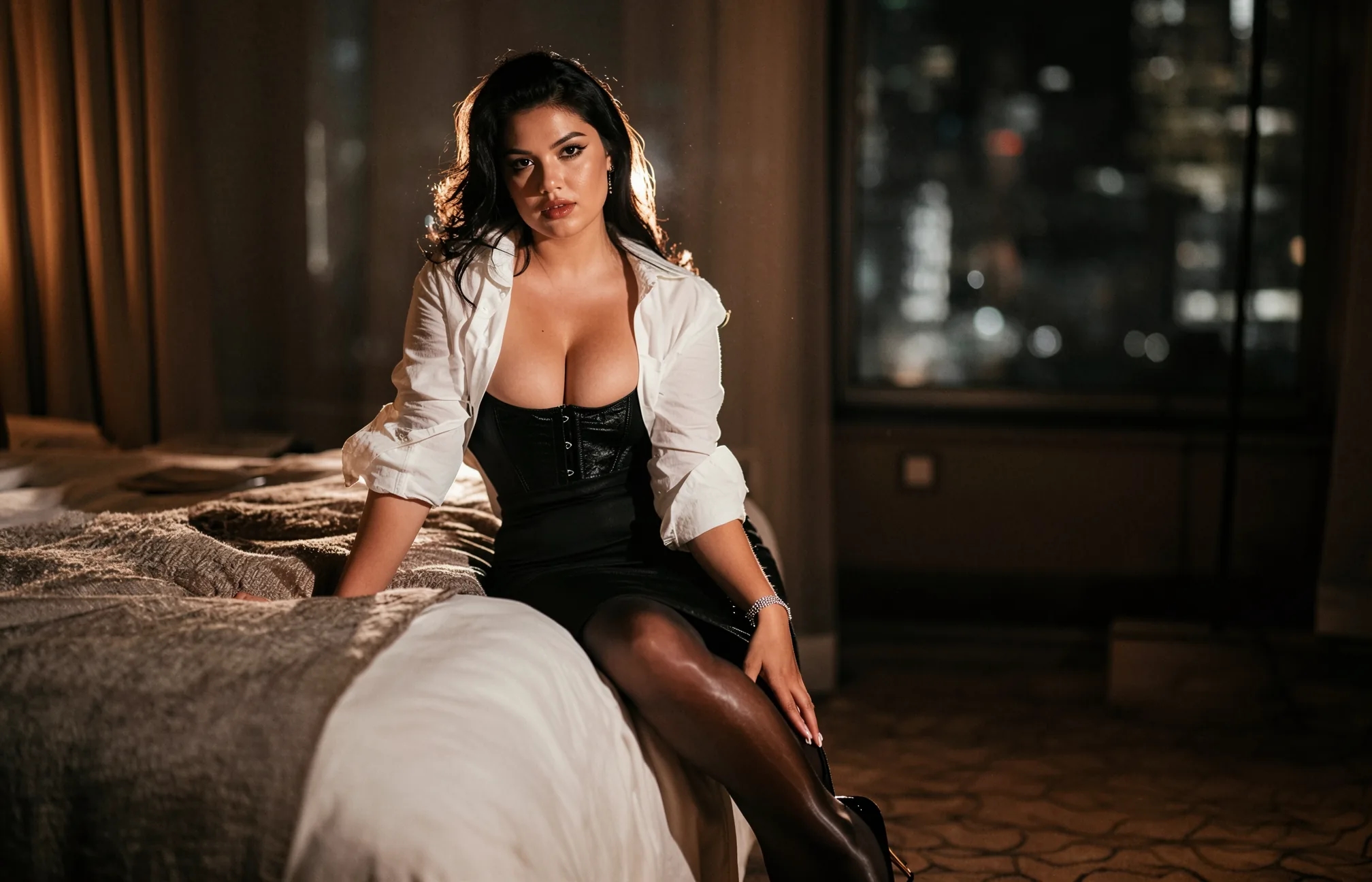
Four Ready-to-Copy Prompts
1. Eye-Level Conversation
Original fictional adult woman, age 29, in a quiet urban cafe, eye-level medium shot, face and upper torso visible, direct relaxed gaze, background gently out of focus, natural window light, balanced photographic composition.
Why it works: Eye level establishes an approachable, steady point of view.
2. Low-Angle City Scene
Original adult fictional architect, age 39, standing before an illuminated high-rise at dusk, modest low-angle medium-wide framing from waist height, vertical lines rising behind the subject, dark coat, confident natural posture, realistic perspective.
Why it works: The low camera explains the building scale without an extreme distortion.
3. Over-the-Shoulder
Two original fictional adults, both over 30, discussing an antique map in a bookstore, over-the-shoulder composition from behind the nearer figure, second character in focus, tabletop as the visual anchor, warm reading lamps, cinematic still.
Why it works: The point of view implies a relationship between figures.
4. Wide Environmental Portrait
Original adult fantasy traveler, 34, standing at the edge of a misty cliff path, full-body wide shot with the subject on the left third, vast landscape to the right, clear horizon, soft morning light, painterly fantasy illustration.
Why it works: Negative space creates a sense of scale and narrative direction.
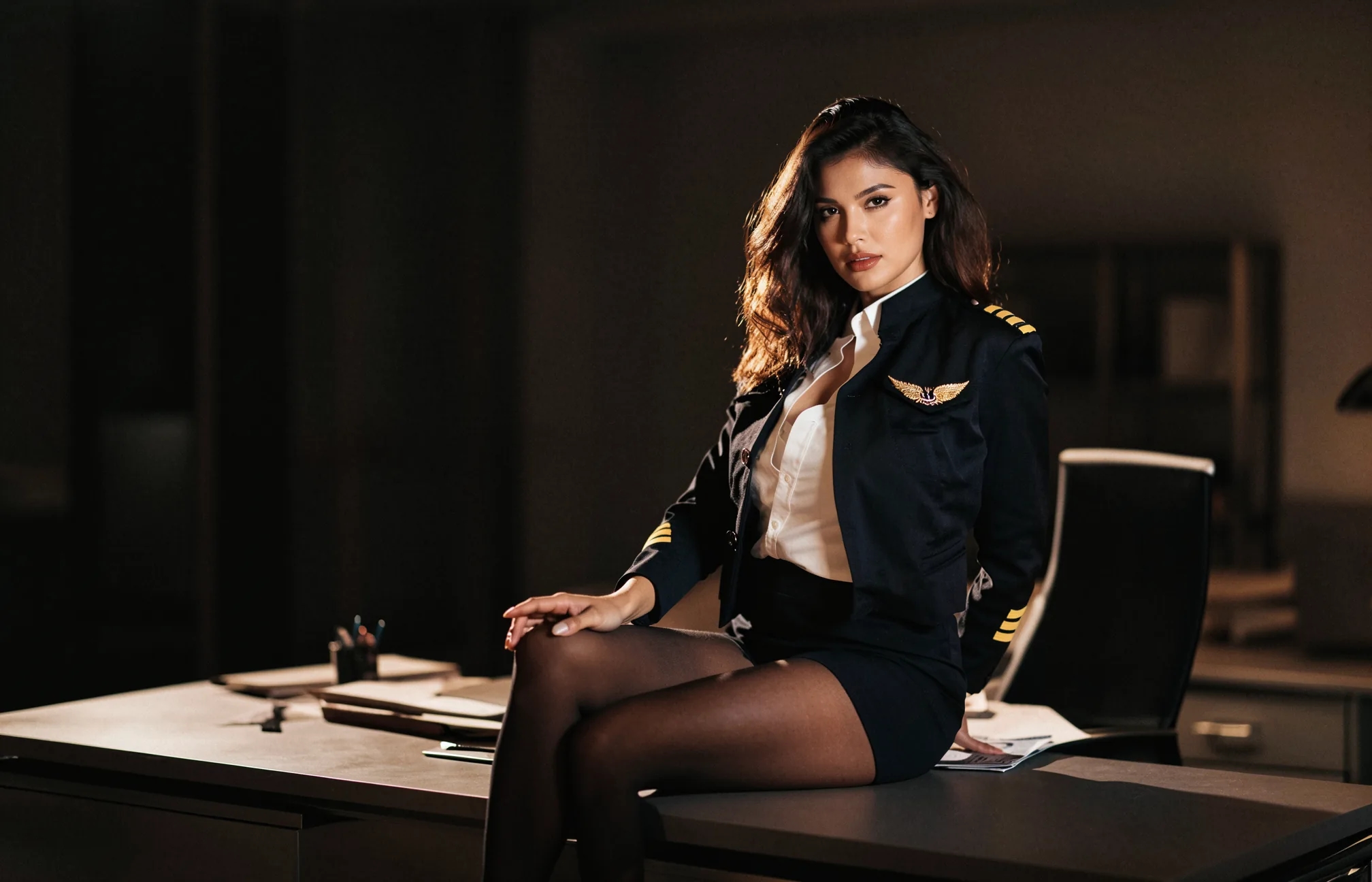
Related Prompt Collections
To prepare a still that will animate more cleanly, see AI video first-frame prompts. To make the light source easier to control, see AI lighting prompts.
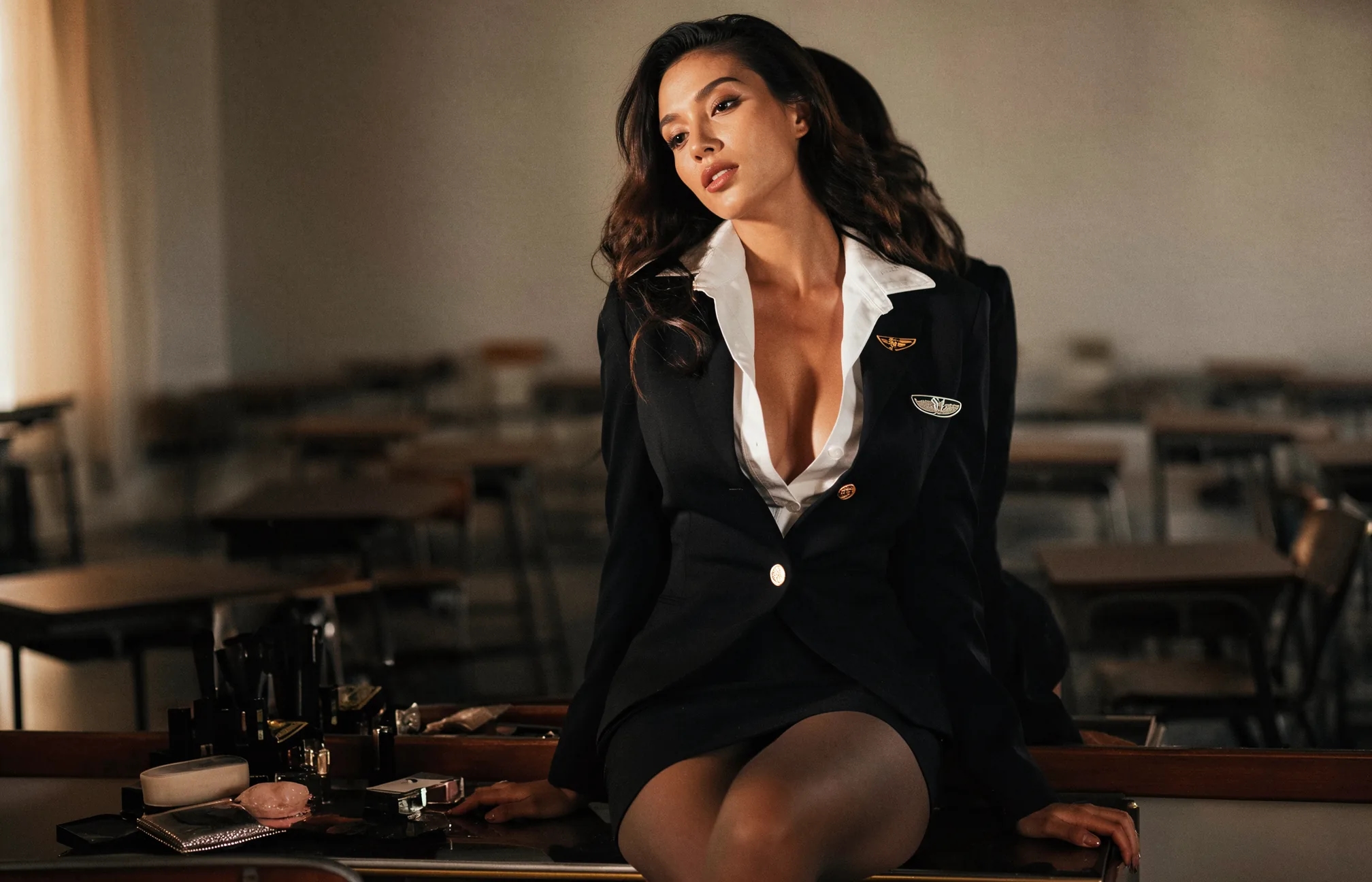
Combine Camera Angles with Crop and Orientation
An instruction such as "low angle" is not complete unless you also decide the shot size. Try "low-angle medium shot" or "eye-level waist-up portrait." If you plan a gallery thumbnail, favor a clear subject at smaller sizes. For a mobile poster, choose a tall composition and leave space around the face or outfit.
Camera position and aspect ratio are separate controls. You can preserve the same point of view in a tall or wide frame, but the surrounding background changes. Record a few combinations you like and compare the results before committing to a long series.
If your current style is inconsistent, start with choosing an AI image model.
Common Mistakes to Avoid
Avoid requesting an overhead shot and an eye-level face portrait at the same time. Do not combine extreme fisheye distortion with a strict realistic portrait unless exaggerated proportions are intentional.
Frequently Asked Questions
Try Your Own Variation
Start with one of the examples, keep your fictional adult subject and main visual direction clear, then change one element and compare the outcome. Primary CTA: Create an AI Image.